
Spotlight.
Malini Chakrabarty
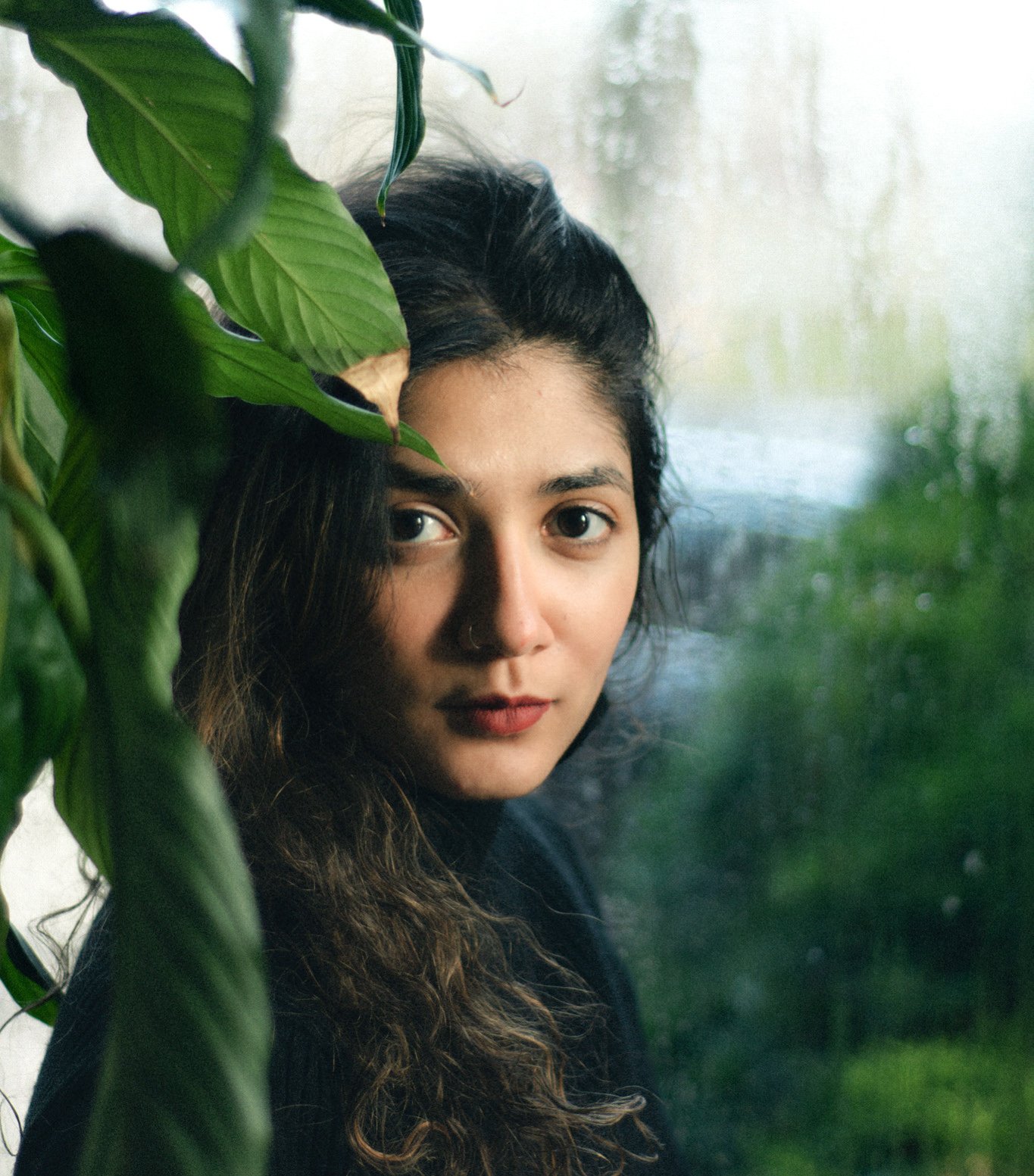
INTRODUCTION
Malini Chakrabarty is an Indian-born artist, filmmaker, and designer based in Scotland and the founder of Art of Birdie Studio. Working across illustration, exhibition design, and visual storytelling, her practice explores power, migration, memory, and representation. She collaborates with museums, cultural institutions, and social justice organisations across the UK and internationally, which means she often gets to work with some of the coolest people doing thoughtful, justice-focused work. Malini is a UNESCO RIELA Affiliate Artist and has worked with organisations including Historic Environment Scotland, the University of Glasgow, Scottish Refugee Council, Scottish Wildlife Trust, the Gallery of Modern Art, Education Scotland, Musician’s Union, CRER, Human Rights Consortium Scotland, among others.
INTERVIEW
How did you get into your creative practice? What initially inspired you?
I was a quiet, often lonely child, and I was bullied a lot growing up. Drawing became a refuge. Art became a language for emotions I didn't yet have words for, and a place I could retreat to when the world felt unkind. Growing up in Kolkata, the cultural capital of India, I was surrounded by colour, movement, and texture, from festivals to street life to the everyday. Those things shaped how I saw the world before I even knew there was something called an artist. And then there was travel. Every summer, my parents took us to the Himalayas, and every winter to the coasts of the Bay of Bengal/Indian Ocean/Arabian Sea. They took us all over India, different states, languages, cultures, and landscapes. That kind of childhood stays with you. It teaches you to see, to really see, the world around you.
Films, books, and cartoons were huge for me too. I grew up in a Bengali-speaking household, so watching films and reading books is genuinely how I learned English. That early relationship between images, emotions, and storytelling is still at the heart of everything I make.
What themes do you tend to interrogate in your creative practices?
Power. Who holds it, who doesn't, and who gets deliberately left out of the picture. I'm interested in the politics of visibility: whose stories get centred, whose get erased, and how creative work can challenge that. As someone who's navigated spaces where voices like mine weren't always valued, my practice gravitates naturally towards justice, migration, memory, and collective healing. The question underneath all of it is: how can storytelling redistribute power?
What is your favourite project you’ve ever worked on and why?
Honestly, I feel deeply aligned with everything I create. The organisations I get to work with are ones I genuinely adore, and the projects almost always come back to justice and dignity. So this is a hard question. But recently, two projects have stayed with me in a particular way.
The first was with the Gallery of Modern Art Glasgow as part of the Create Empathy project. I designed a card game inviting young people to imagine and build their own anti-racist heroes, while learning about real figures who fought for justice. Witnessing them interact with this resource and draw their own characters awoke something deeply spiritual in me. Like something clicked into place and said: yes, this. As part of the same project I also designed a decolonial map of Goma and its surrounding area, surfacing histories that had been pushed to the margins. I've always loved that kind of uncovering. It all comes back to interrogating power through art.
The second was designing the Traces of Empire exhibition with Historic Environment Scotland, currently showing at Blackness Castle before travelling to Stanley Mills in Perth. Exhibition design can be a solitary process. Long hours behind a screen, quietly working through images, text, and layout while sitting with the weight of the histories being shared. So many times I found myself deeply moved by the stories I had the responsibility of illustrating.
At the opening, an older woman from the African Caribbean Women's community group saw the panel featuring her story and her image. She said that in 62 years of her life, she had never seen herself represented like that before. She hugged me. Moments like that stay with you. That's the power of good storytelling. That's why the work matters.
What advice would you have for creatives of colour looking to get into your creative practices?
Be curious and stay open. Creativity isn't a straight path; it's a flow. Try things, fail, learn, and genuinely listen to people. Every person has a story that might change you if you let it. Each person holds universes. Don't compete. Authenticity travels much further than comparison. When your work is honest and rooted in your actual experiences, the right collaborators & allies will always find you.
Creatives of colour are often alchemists. We take grief, anger, and injustice and transform them into something meaningful through art. That work moves people, challenges systems, and helps communities heal. Keep going, even when it feels small. The ripple effect is real, even when you can't see it yet.
What are you currently working on?
Quite a lot, which I'm genuinely grateful for. I recently finished illustrations for a Migrant Rights Resource with the Human Rights Consortium Scotland, and I'm working on branding for Ten Years' Time, a consultancy rethinking philanthropy through a anti-racist lens.
This summer, I'm collaborating with the Mental Health Foundation and GoMA on a workshop exploring how experiences of racism can be transformed through collective art-making, culminating in an exhibition. I've also recently joined the leadership team at Healing Arts Scotland, and I'm an advisor to Refugee Festival Scotland. The June programmes are ones to watch!
On a personal level, I've recently begun EMDR therapy as part of my own healing journey, and it's deepened my interest in how art can support mental health and collective healing in ways I'm still sitting with. And I've just set up my own home studio and invested in a large-format printer so I can start producing my own art prints, something I've wanted for years. My practice as a UNESCO RIELA Affiliate Artist keeps pulling me towards collaboration, and honestly, one of the things I love most about this work is the people it puts me in community with.