
Spotlight.
Jj Fadaka
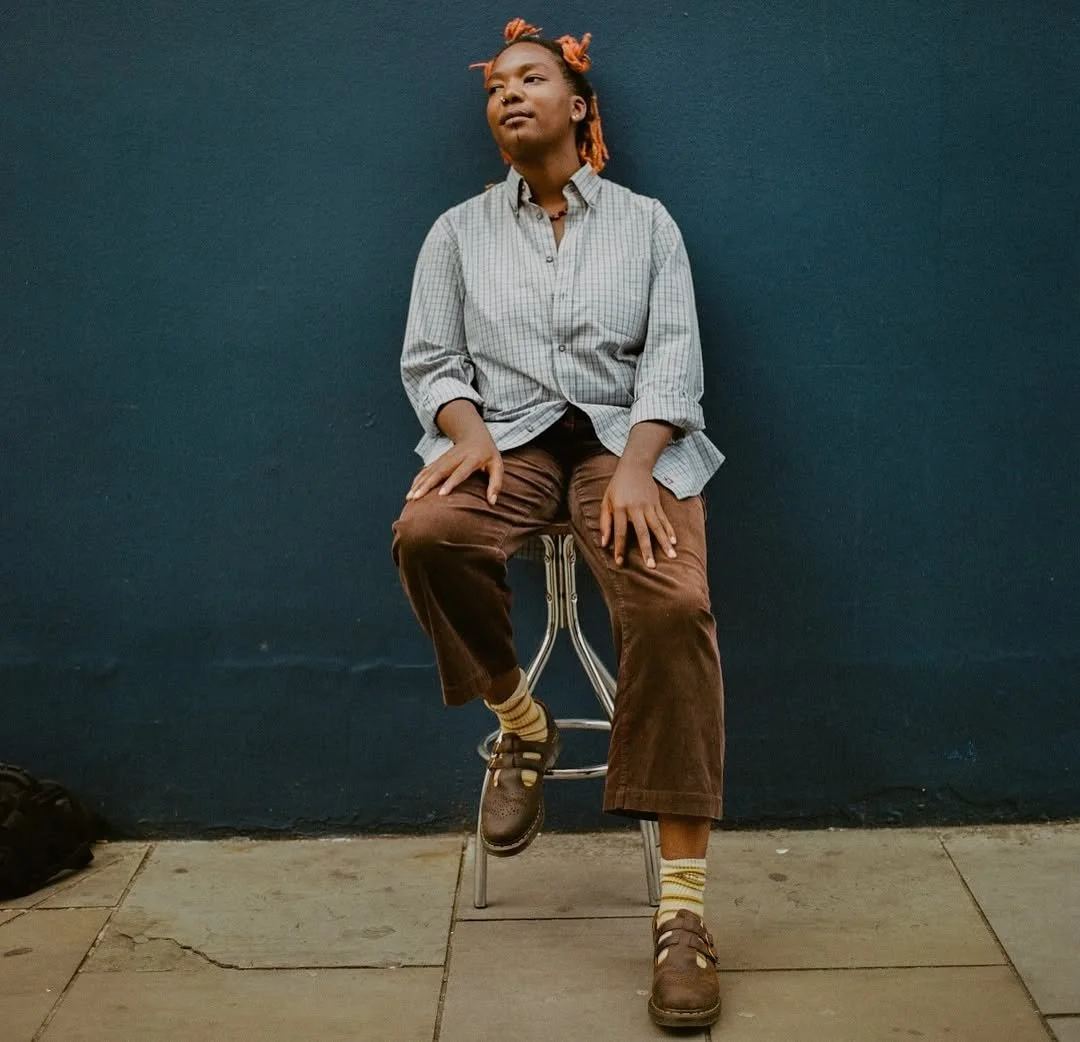
INTRODUCTION
Jj Fadaka is a writer, artist and facilitator based in Edinburgh. Their writing explores the possibility that abolition, feminism, and love give us to create change. Mixing research and storytelling, Jj speaks to the political urgencies we face while centring community and joy-making in building our resistance.
INTERVIEW
How did you get into your creative practice? What initially inspired you?
I grew up in Essex, and I've been saying to people that there wasn't many arts and cultural funding there. I remember going to the library and doing historical research and always been interested in history. And then the library started to close at 2 in the afternoon because of funding cuts, so I couldn't go after school anymore. So my access to arts and culture was through my phone and I would watch lectures and listen to essays on YouTube from like Toni Morrison and Bell Hooks and started doing creative writing myself in poetry inspired by black feminism. Then I moved to Edinburgh and I found grassroots organisations that were doing open mics nights and funding for poetry and literature that I had never seen before.
So, it was going to those open mic nights that I started to build a creative practise, and realised writing could be a job that I could do professionally. Plus I was able to find peer support from poets of colour in the UK. I think when we speak about black feminist literature, we're often speaking about U.S context. So, to meet successful POC poets in Edinburgh was inspirational for me and it encouraged me to keep writing and to share my work.
What themes do you tend to interrogate in your creative practices?
Because I don't come from an art background, accessibility is most important to me, making art inclusive of different perspectives and different backgrounds. The themes that I cover centrally is black feminism. I'm interested in how women can offer a unique perspective on what should change in society because they sit in the home space and they can hear everybody else coming back home, whether that be from work or school or whatever.
I think that my work is about amplifying those voices, people who are actually experts in how society should run and how it currently is being run, but aren't called upon as experts, maybe because they don't have a defined job role
or they're not getting paid for that kind of caring work they do. So yeah, black feminism is very central to that. And something I love about black feminism is that it is about the imagination and sharing your desires and speaking freely. It is liberating for everybody because it is concerned with looking at the most vulnerable in society, raising them up, and then there is a belief that everybody will benefit from those measures.
I would also say my work is very much inspired by lived experience. So going through the healthcare system, being someone who is a queer Nigerian person, and trying to make sense of all these identities. I want to see identity as a space of imagination, starting with a blank page. And what does it mean to define yourself for yourself?
What is your favourite project you’ve ever worked on and why?
I would choose my current one because it's where I've had the most agency. And so basically my current project is called The Masquerade and it's a fringe show that is coming to Edinburgh Fringe this year for the first time. It's a dance and theatre show. Basically where I use the traditions of Nigerian masquerades, who are these performers who don't speak, they're said to be inhabited by spirits and they dress in domestic materials, such as broom, cocoa fibre, that kind of thing, and they are gender bending, so I'm performing as a masquerade and the set design will be a masquerade living inside my body.
And this masquerade is bringing its moral compass from the spirit world and asking me to not deny myself. As human beings we are self-consciousness, and we want to assimilate. There's all this fear about if I face who I truly am, will I be able to hold it? And that's how I felt being a queer Nigerian. I can never possibly hold these two things. They're too powerful and too oppositional. And that's not true. So, the masquerade is how I practise my Nigerian spirituality in the modern world.
What advice would you have for creatives of colour looking to get into your creative practices?
I would say don't wait for institutional support before making anything. There are so many peer groups, grassroots organisations, and people set up community groups every day. In Scotland especially, we are so lucky to have that kind of culture where you don't need much startup money, you could perform on the side of the street for free. And I used to work in a police box, like as a barista. And I would write poems on a chalkboard outside, and I would perform for customers. It’s important to connect to your audience, to connect to people who look and feel like you, who relate to your lived experience.
What are you currently working on?
So the masquerade, for Edinburgh fringe, And I have been interested in masquerades in terms of how textiles can be a form of archiving our stories. I want to explore costume making and how this can be shared with different diaspora communities, even in Scotland, you know, we have the kilt that says so much about your family heritage, how textile and touch can be a language that we can all relate to. And I'm working on bridging the gap between my experience and other community groups that are interested in using the same techniques.