
Spotlight.
Gauri Sharma
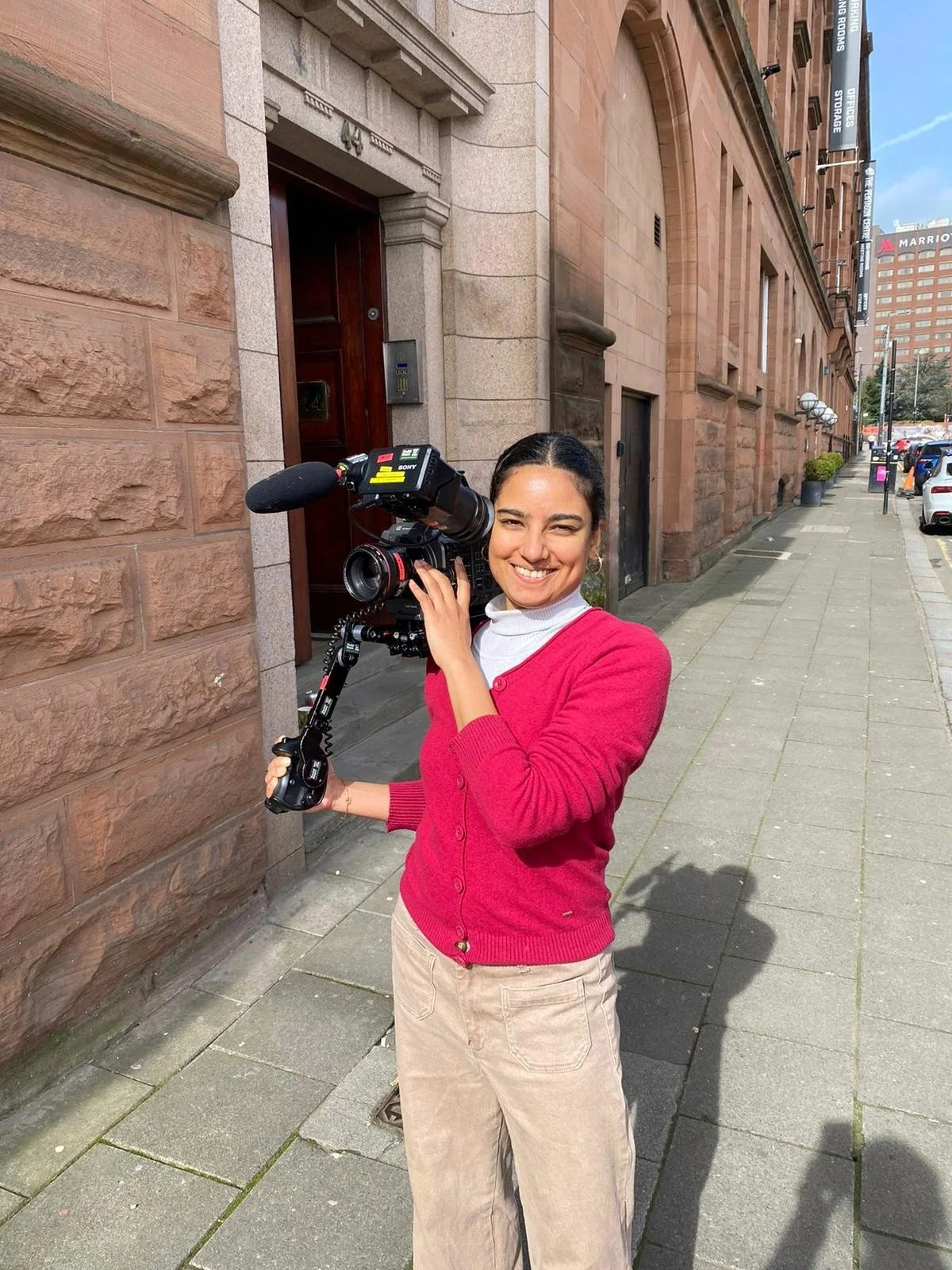
INTRODUCTION
Gauri Sharma is a self-shooting documentary director and unscripted TV professional based in Glasgow. A passionate, neurodiverse storyteller, she draws on the belief that stories are medicine. Her work is often contributor-led and engages with personal and political manifestations of the human condition. She has worked on award-winning programmes for major networks including National Geographic, BBC, Discovery Channel, Prime Video and DW Documentary. In her independent practice she has made two short documentaries and is developing a third.
Gauri is an alumni of the Film Directing MA at the Edinburgh College of Art and was part of the Scottish Documentary Institute led Bridging The Gap cohort in 2024.
INTERVIEW
How did you get into your creative practice? What initially inspired you?
I decided that I wanted to become a documentary filmmaker when I was 14 years old. I don’t think I fully understood the concept or what it would take to become one. It came from years spent sitting beside my father as he flipped between National Geographic and Discovery Channel on TV. I especially enjoyed watching programmes that introduced me to new cultures. For a little girl sitting in her living room, it was the closest thing to travelling.
I guess I was inspired to travel and see those places for myself and to that little girl, making TV documentaries was the only obvious way to do it. And I have to say, being part of documentary crews often gave me very unique and unconventional access to those new cultures.
What themes do you tend to interrogate in your creative practices?
My first film ‘About Grief’ dealt with processing grief through art, my second film ‘Before They Erase Us’ is about the politics of cultural erasure and preservation, and a third project currently in development deals with food sovereignty and queer ecology. As you can tell there aren’t any specific themes I stick to, I simply dig into whatever interests me at any given time.
What is your favourite project you’ve ever worked on and why?
‘About Grief’ , my first self-funded short doc is the closest to my heart and my favourite so far. It was a one-women crew – just me, my humble Sony A6300 camera, the most basic sound gear and a borrowed tripod. For about 30 days, I simply showed up everyday and filmed. It allowed me to fully immerse myself in the experience of being an actual fly on the wall, which was nearly impossible while assisting on TV documentaries. The film is about my friend Zeny, an oil painter who suddenly lost her uncle and tries to channel the grief through her work. To be allowed into a space like that was also a privilege I regard very highly.
Lastly, the making of this film was also a very important lesson in access, boundaries and consent for me. When you approach contributors on behalf of a major TV network, they consent to participating readily but the lines of what they’re comfortable with can get blurred very easily during a shoot. This was something that bothered me as an assistant responsible to ‘get the shot’.
When I was filming without a network brief and with a friendship at stake, I could allow reality to unfold and align with my vision eventually and push the limits more mindfully, if needed.
What advice would you have for creatives of colour looking to get into your creative practices?
Your work does not have to be about your ethnic identity, unless that is what you want.
‘Getting in’ could be tougher and slower than you expect, hang on, seek support, keep networking, keep upskilling, keep applying for things. Seek more support.
This is something I struggle with myself but, social media and visibility is important. Talk about your work, talk about yourself, be humble but be out there.
If you’re working with contributors, remember - the film belongs to you, the story belongs to the contributor. So your documentary must never tell a story that the contributor does not identify with and it’s your job to make sure of that.
Repeatedly remind yourself to enjoy the process!
What are you currently working on?
Currently, I'm working on two short documentaries. One of them deals with Islamophobia and its reflection in neglect towards historic architecture. This is currently in post-production. The second project is in early development; it explores the inherent queerness of the ecological world and the idea of food sovereignty.