
Spotlight.
Naoko Mabon
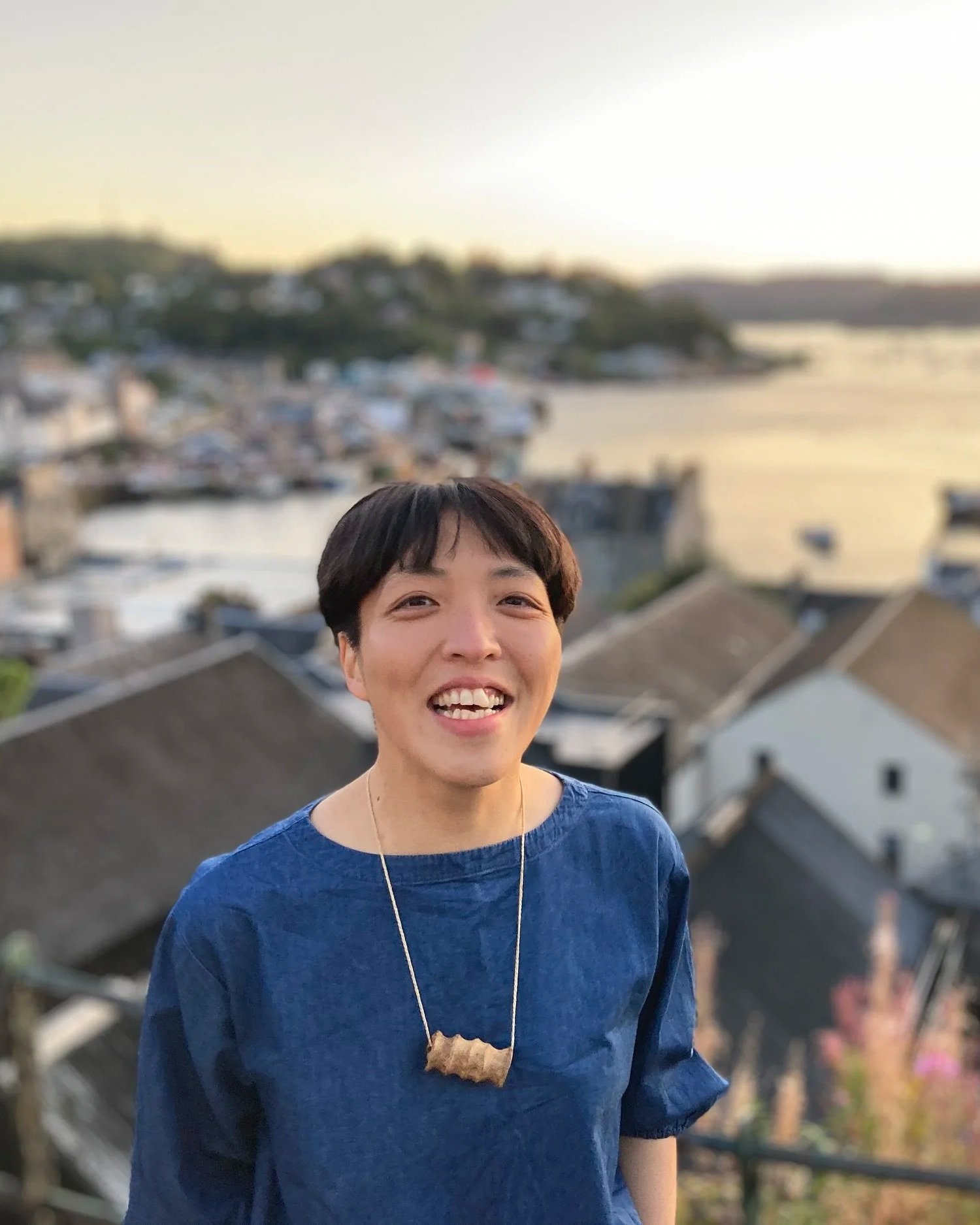
INTRODUCTION
Naoko Mabon is a freelance art practitioner specialised in curation and facilitation. Born and raised in Fukuoka in Kyushu island and currently residing in Oban in Argyll, the coastline of the Gaels. Driven by her own lived experience as an ethnic minority in the UK and the sense of urgency and responsibility towards environmental and societal planetary issues, Naoko uses arts and her skills as effective tools to generate relationships and changes for an even more just, diverse and sustainable world for present and upcoming generations.
INTERVIEW
How did you get into your creative practice? What initially inspired you?
The recognition that I really enjoy working with people to create something together. I love the sometimes messy but joyful and living process of creating something.
What themes do you tend to interrogate in your creative practices?
I tend to curate small but intimate-scale collaborations that:
・Use creative practice as a way of addressing site-specific issues and generating meaningful social change;
・Involve international exchange and intergenerational community participation to benefit local communities or areas;
・Blend indigenous or ancestral knowledge/skills with contemporary contexts to carry tangible/intangible cultural heritage to subsequent generations;
・Employ materials or techniques with low environmental impact to make collaboration long-lasting in a self-sustaining, circular system.
What is your favourite project you’ve ever worked on and why?
I am currently developing Collective Cares, a new peer-led curatorial initiative for contemporary arts in Zambia, with my co-lead Luyando Muleya, Livingstone-based curator and researcher, along with other colleges across Zambia. Zambia’s artistic landscape is rich in expressions but lacks visibility, infrastructure, and support. To improve this, we are creating a hybrid — both physical and digital — space for conversation, research, and collaboration. Framing curation as a practice of care, we root ourselves in solidarity and critical friendship over competition and collusion.
I conducted a one-month residency at Lusaka Contemporary Art Centre back in June, and there, I saw myself that there is a great enthusiasm and need for curatorial practice and critical discourse in the creative community. Hence my involvement — beyond my simple excitement in initiating such a mediatory space between society and arts communities from the ground up together with my international peers and artists, I could see that my inputs and skills as a Japan-born Scotland-based curator can be useful and bring a mutually beneficial exchange or context in this particular development.
What advice would you have for creatives of colour looking to get into your creative practices?
It is fine to be small and slow. Just follow your intuitions and passions, and keep going. If you keep going, you can develop your confidence and momentum, as well as widening your network, deepening your perspective, and sharpening your focus. It is ok to fail because that's a chance for learning, improvement and shifting. Be nice, kind, honest, and be yourself unapologetically. This is sometimes difficult, especially until you gain the confidence and momentum but — please remember, you can say “no”!
What are you currently working on?
As mentioned earlier, I am developing Collective Cares, a new peer-led curatorial initiative for contemporary arts in Zambia, with my co-lead Luyando Muleya along with other colleges across Zambia.
But since this is a not-for-profit initiative centring on the long-term benefit for the contemporary arts community in Zambia, we have no money or institutional backing. Therefore, we are running a crowdfunding campaign to gain self-sustaining momentum. Please please support us though donation or sharing — your support in any scale or shape matters and encourages this peer-led initiative: