
Spotlight.
Kialy Tihngang
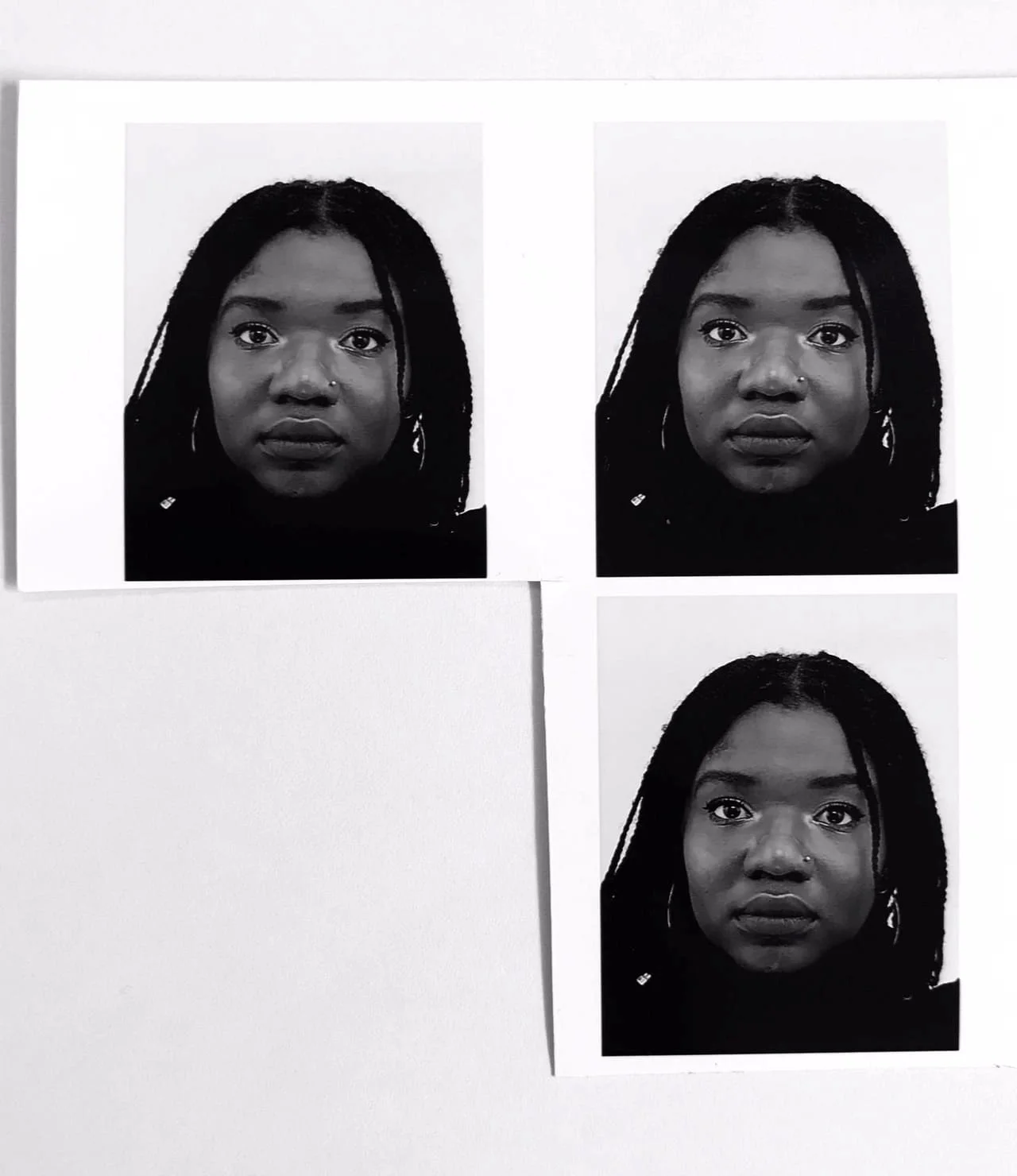
INTRODUCTION
Kialy Tihngang is a Glasgow-based Cameroonian-British artist and researcher. She works in moving image - involving elaborate handmade sets, costumes, graphics, props, and collaborations with other practitioners - as well as sculpture, textiles, performance, and writing.
Tihngang’s practice focuses on colonial European misrepresentation, extraction, and demonisation of West African cultural practices, but also on her own misremembering, misreading, and romanticisation of said practices, fabulating artefacts from reimagined histories and speculated futures.
Her work uses Afro-presentism, the dark humour of Nollywood, and the visual language of Western mass media to explore Blackness, queerness, Britishness, and the many absurd structural oppressions surrounding these personal themes.
INTERVIEW
How did you get into your creative practice? What initially inspired you?
Throughout my childhood I had one unchanging ambition: to become a fashion designer. At the same time, I was always totally fascinated by music videos, movies, and even adverts. It was only when I unceremoniously dropped out of fashion school and felt a sense of complete direction lessness, that this preoccupation with the moving image re-surfaced. By the time I graduated university - having moved from England to Scotland and started studying Textiles in the interim - I realised that ‘Useless Machines’, my final ‘collection’ of fabric-wrapped sculptures and a video advertising them, was more art and than design.
What themes do you tend to interrogate in your creative practices?
I’m most interested in very personal themes of Blackness, Africanis, Britishness, queerness and girlhood, all through an absurd and humorous lens. The idiosyncrasies of Nollywood, musicals, and infomercials are all stylistic influences.
What is your favourite project you’ve ever worked on and why?
My most recent film, Out Of Office, is a time-jumping body horror about the perils of corporate misogynoir. It was a continuation of my usual multiple-hat wearing: writing, directing, making sets, writing songs, working on costumes etc, but with the added difficulty of also being my first time ever directing a crew. The making process was such a crazy, stressful learning curve, and I had so much imposter syndrome throughout it. But now that it's finished and I have some distance from it, I’m so proud of myself, the cast, the crew, and the work. It's definitely given me the foolish desire to make even bigger, longer projects.
What advice would you have for creatives of colour looking to get into your creative practices?
On a practical note, a lot of my work involves large elaborate sets and tiny budgets, so lack of space and lack of stuff (props, costumes, etc) has always been an issue. Luckily, there is free stuff everywhere, for those with eyes to see! Facebook Marketplace, Gumtree, Freecycle and Circular Arts Network have good local directories. Charity shop curtains/bedsheets are cheap fabric sources for costumes and sets. I regularly cruise the Gumtree ‘Freebies’ section, and often the weird and wonderful things I find end up influencing part of a film. And there's so much abandoned junk on the streets that, if you’re lucky enough to have a few rainless, mould-less days in a row, you will likely stumble across a gem. If you have a car, you need to check your privilege. But don’t be put off if, like me, you can’t drive. As well as befriending the drivers in your friend group - as far as is appropriate - you can also invest in one of those granny trolley things, or a sack truck, and you are GOOD TO GO.
To store these fabulous finds, networks like Outer Spaces who allocate disused buildings to artists could be really useful (unfortunately the spaces fill up fast, so join their mailing list to be first in line)
On top of all of this, I’d encourage you to use the network you already have. I think the word ‘networking’ has some quite negative and daunting connotations, especially if if you’re neurodivergent, or you find socialising draining, or you’re hyper-aware of how being racialised might negatively affect how strangers perceive you (the Traitors has just started again, and we’re seeing this happening live...). But so much of the work I’ve made so far has involved borrowing things like equipment, costumes, props, studio space from friends, flatmates, and family. Always show gratitude, but don’t be afraid to be audacious! The worst anyone can say is no, but often, people are more willing to help you than you think.
Lastly, learn how to write about the work you haven’t made yet. As someone often writing funding applications for conceptual video art projects, I've found it really important to be able to explain what an idea will look like, in clear, easily understandable, but still evocative language. Funding officers are unfortunately rarely artists, so clarity and concision are key. The White Pube Successful Funding Library is an excellent resource for reading old funding applications and getting an idea of how to structure your ideas legibly. Do not be afraid to ask for help with this writing!!! These things are not meant to be tackled alone. Also, don’t worry about whether your work might deviate from the proposal; it will, and funders understand that; it's part of the process.
What are you currently working on?
I’m currently researching and writing an artists’ film exploring the interrelationship between mermaids, mud, and mythology, through a Cameroonian-British lens. It’s quite sedimentary at the minute, but I’m hoping to mould it into something quite exciting. I can say nothing more at this point...
DISCOVER MORE
Website