
Spotlight.
Simone Seales
INTRODUCTION
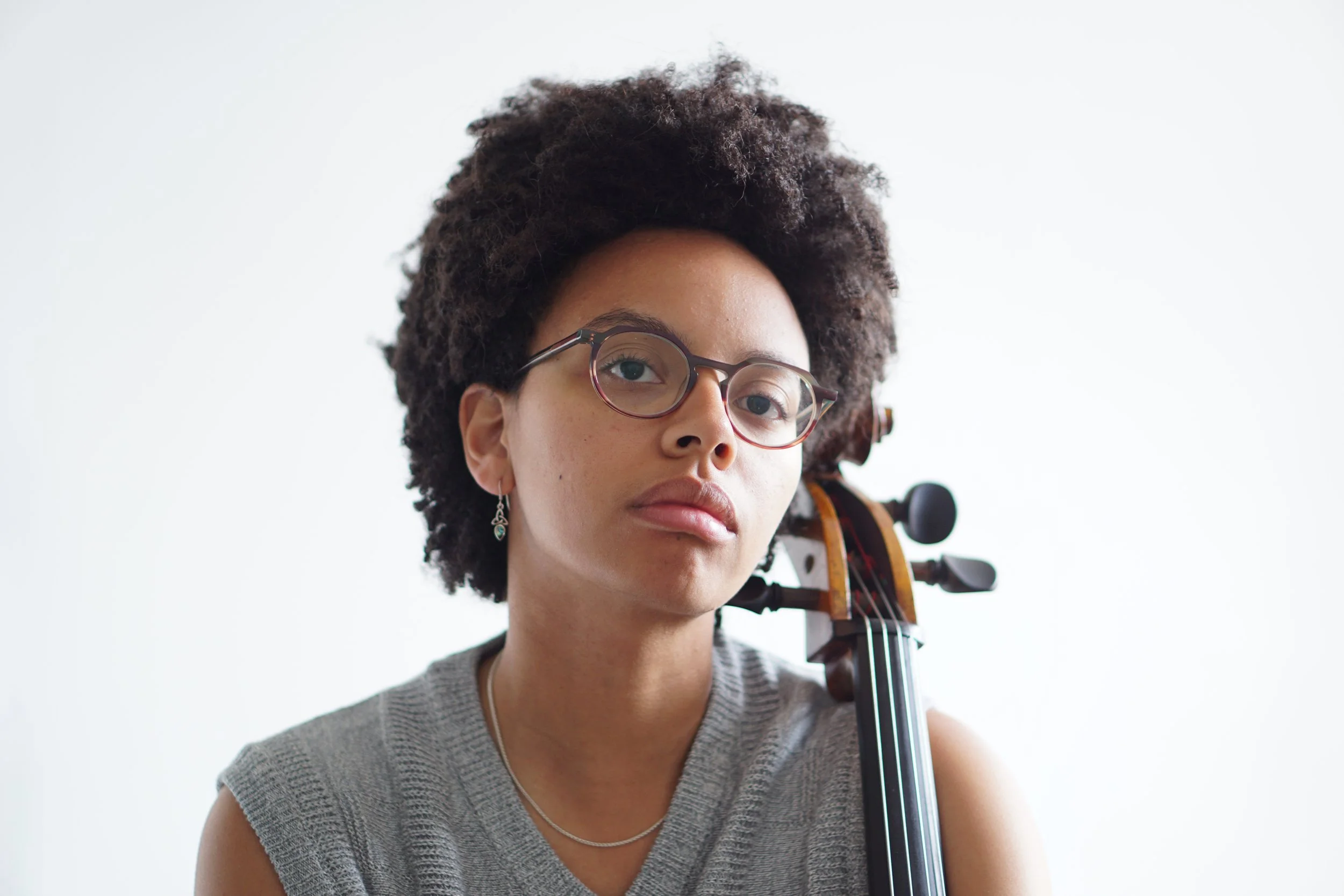
Simone Seales is a Glasgow-based cellist and performance artist working with free improvisation, live looping, poetry, and theatre. Their practice centres play, silliness, and connection, exploring sound as an embodiment of emotion. Their creative influences come from Black feminist leaders such as Audre Lorde, Assata Shakur and bell hooks. Within Simone's work, they centre Blackness, sexuality, intersectional feminism and anti-racism.
At the end of 2025, they released their debut studio album Dearest to critical acclaim. A poetry-music album inspired by the warmth, nostalgia, and tension of first queer love, Seales wrote Dearest as a way of honoring and releasing their first relationship from a decade ago. While the album is grounded by poetry, written by Seales and performed by Mele Broomes, the emotional weight is carried by the voice of the cello. Seales pulls sounds out of it which are rooted in classical technique and blended with the jarring groans, wails, and scratches of free improvisation.
INTERVIEW
How did you get into your creative practice? What initially inspired you?
My creative practice has evolved over the last decade, from focusing on classical cello repertoire to intersectional feminism and how performing music can be a form of activism and community building. From a young age, I’ve been interested in activism in some form and was often curious to understand why certain injustices existed and how that could be changed.
It wasn’t until 2020, upon meeting a friend in Paris who was studying philosophy, that I really began to dive into how activism and my artistic practice can intersect. They would send me essays and articles that they were reading, introducing me to many of the authors and activists who have come to deeply influence me such as Angela Davis, bell hooks, and Audre Lorde.
What themes do you tend to interrogate in your creative practices?
I tend to interrogate how emotions are embodied and how music can help us sit with them or move through them. I spent several years developing a trauma-informed practice which simply means I am aware of how trauma affects the body, behaviour, and how events are interpreted and responded to.
Often in live performances, I want people in the audience to feel connected to one another and to acknowledge the shared experience they’re having, especially as society becomes more digital and isolated. I am always asking myself: how can I help others name the feelings inside them? How can I nudge someone to share how they feel with someone else?’
What is your favourite project you’ve ever worked on and why?
My favorite project I’ve ever worked on is Oh Mother by RashDash. It was my first major project after my post-graduate studies, and it was extremely influential to my practice.
Abbi Greenland, Helen Goalen, and Becky Wilkie showed me what it really looks like to devise work collaboratively, to listen and try every idea. They also showcased how to make work under pressure and to collaborate with a wider production team. I learned so much from them, and I don’t think I could ever thank them enough for what they taught me.
What advice would you have for creatives of colour looking to get into your creative practices?
This may seem pedantic, but I genuinely think it’s best to ask questions. Reach out to folks who inspire you, and don’t take it personally if they don’t respond. Go and see work, take a friend with you and chat about it with them afterwards. A creative practice is as much about analysing and discussing other work, as it is about creating your own work.
Oh, and read books! Or listen to audiobooks. There are so many people out there that have done the work or have lived through the same thing you have. I love reading because it reminds me I’m not the first person to ever feel how I feel, and it inspires me to investigate how I can transform my experiences into my medium of art.
What are you currently working on?
I’m currently working on further developing my creative practice as a live performer! I’m looking at what it would mean for me to tour my latest album, Dearest. I’d like to make a touring model that suits me and my access needs, and one which can also be shared with other folks who may have similar needs to me.
I’m also working on further promoting my album and continuing to collaborate with my favorite artist, Mele Broomes.