
Spotlight.
Joanna Blémont
INTRODUCTION
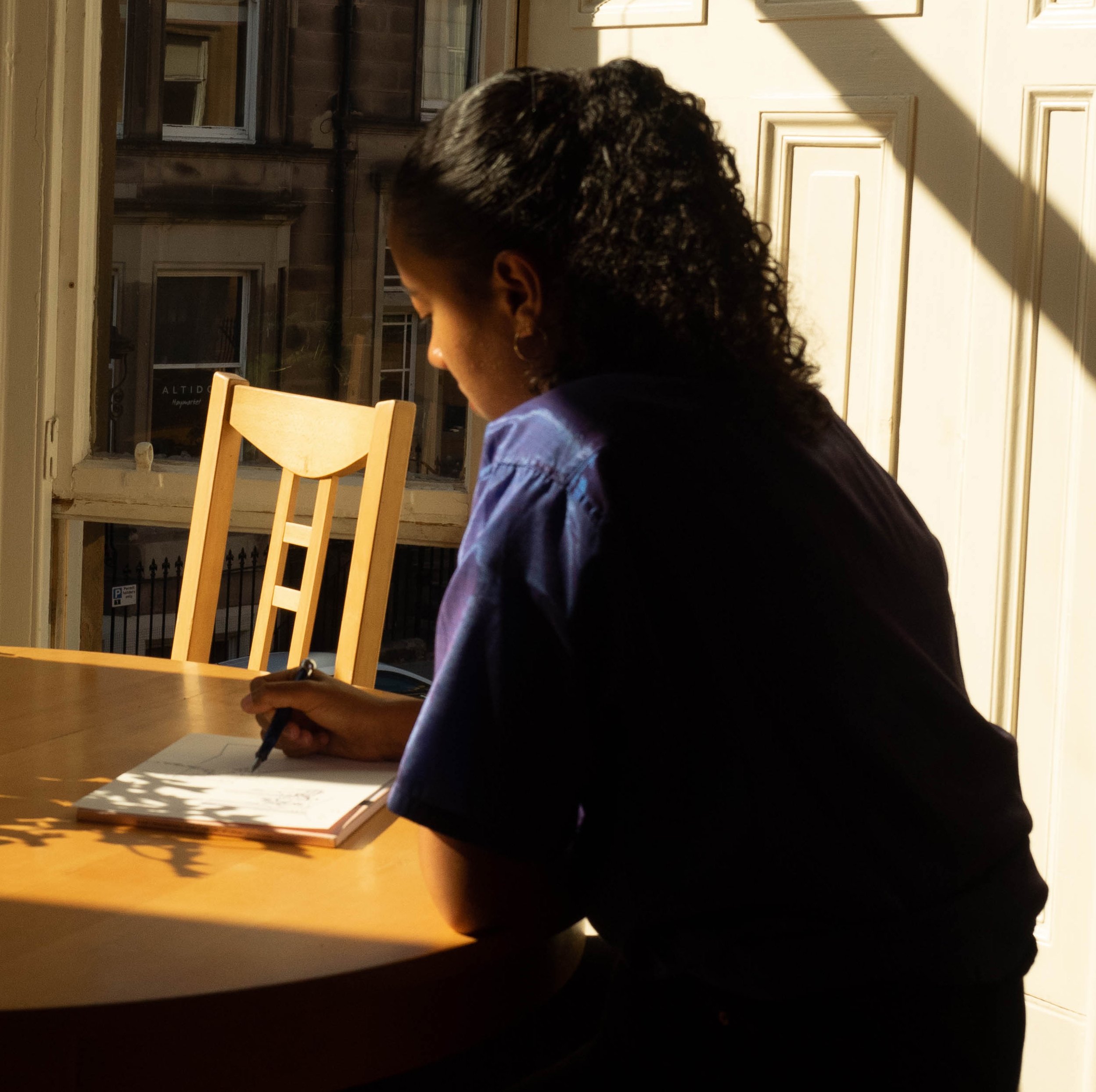
Joanna Blémont is an illustrator and artist based in Edinburgh. She creates silent watercolours that explore the boundary between the familiar and the strange. Her partially figurative images subtract specific details, allowing the work to move beyond fixed contexts and invite a collective gaze. She has recently created illustrations for The New Yorker, Bloomberg Businessweek and The Baffler.
INTERVIEW
How did you get into your creative practice? What initially inspired you?
I’ve always been interested in drawing and illustration, but I was hesitant to pursue them seriously at first. Becoming a freelance illustrator isn’t a very defined path, you only understand it once you’re doing it, and even then it can take many forms. I initially studied Fashion before transferring to Fine Drawing during my BA in Brussels. After graduating, I spent a year working in a school and drawing. During this time, I focused on making work without worrying too much about where it belonged, which gradually led to commissions and small collaborations with other artists. This encouraged me to learn more about freelance illustration and I’ve continued to build my career alongside part-time work.
What themes do you tend to interrogate in your creative practices?
I tend to explore in-between states, particularly those that sit between waking and dreaming. I’m drawn to the ambiguity of dreams, and often create imagery that places subtle shifts or disruptions within familiar settings. Working in sequence has allowed me to build a rhythm where a quiet sense of anticipation can emerge. An event feels as though it’s about to unfold, but never fully does. I’m interested in exploring this moment of uncertainty. Leaving elements unresolved allows the work to remain open, and invites the viewer to sit with that ambiguity rather than resolve it.
What is your favourite project you’ve ever worked on and why?
In 2024, I created a zine titled Comatose, made possible with support from Creative Scotland. This project explored themes of transition, specifically within the context of dreams. I approached it openly, made a lot of drawings around themes that interest me and had the time to experiment and make mistakes. I feel like this allowed me to be very intentional in the way I worked.
What advice would you have for creatives of colour looking to get into your creative practices?
I would say to focus on what you have to say and draw from your own experience. Looking back, I think I spent a lot of time trying to make work that would be appropriate for my course/environment instead of thinking of what resonated with me. The perspectives you bring are specific to you, and that’s something to lean into rather than move away from. This feels especially important when institutions have structures which have only started considering People of Colour recently.
What are you currently working on?
I’ve recently been taking online drawing classes after a period of feeling stuck in my practice. I have been able to slow down and return to pencil, step away from sequences, and rethink the way I use colour. I’ve also really enjoyed being part of a class and discussing work with others. Alongside that, I’ve been writing about my process to better understand the themes I return to and how I approach image-making. It’s left me with a lot of ideas, which I’m hoping to explore in a zine I’m currently developing with earthbound press this year.