
Spotlight.
Chak Hin Leung
INTRODUCTION
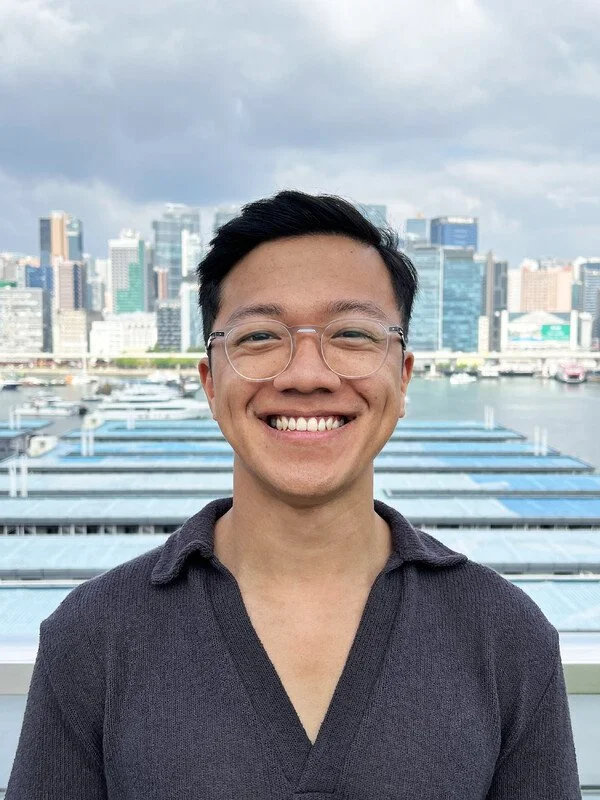
Chak Hin Leung is a Hong Kong–born, Glasgow-based filmmaker working at the intersection of experimental and observational storytelling. His films explore cultural practices, embodied memory and personal identities through sensory, movement-led processes, using designed frameworks to hold space for vulnerability and human connection. He is an alumnus of the Glasgow Film Festival New Talent Mentorship Scheme and Little Pictures.
INTERVIEW
How did you get into your creative practice? What initially inspired you?
I grew up in a family that encouraged creativity, music, dance, drawing, etc. Whenever I could get hold of a camera, I would just mess about with it. I enjoyed making video gifts for my friends and travel vlogging; that’s how I started making documentary films. Looking back, I think access to equipment, like a computer and camera, was a big starting point, because I got to just poke about, be really playful with it, and try all the different effects that Premiere Pro had to offer. I think the musicality and intuition that I gained from other art forms have also shown up in the way I approach my film work.
What themes do you tend to interrogate in your creative practices?
Cultural practices and personal identities are often the themes that I explore in my recent films. I moved to the UK by myself over 10 years ago, and I’m at a place where my tie to my family and heritage is through embodied rituals that are often full of sensorial memories from when I was growing up in Hong Kong, such as going to a dim sum restaurant and its hand-gesture lingo. Coming out as queer in a European context also makes me reflect on my sense of self, values, and how they link to the influence of colonialism and growing up in a colony.
What is your favourite project you’ve ever worked on and why?
It’d have to be the self-funded project We Dance To Heal, which is an experimental dance film that explores emotional memories through movement. I developed this film together with my mentor Oscar Sansom during my GFF New Talent Mentorship Scheme, and it’s been an incredible journey of personal growth to witness the project unfold from the seed of an idea to the final shoot, all within six months. There were a lot of unknowns and ‘firsts’ in this project, but it was also a real labour of love, with a lot of kindness and trust from everyone involved, and for me, it was also about learning to trust myself and trust the process. The most rewarding feeling came from seeing the dancers and crew members all having a great time on set.
What advice would you have for creatives of colour looking to get into your creative practices?
Just keep making films maybe also start actively reaching out to other independent artists, charities, or projects that you want to work with early on in your career, so that you start to build up experience, a network, and a portfolio. Apprenticeships or mentorship schemes, such as Little Pictures and rad Scotland TV traineeship, are also really good ways to gain industry experience and guidance. If you are based in Scotland, there are POC-focused funding opportunities that pop up throughout the year, so have your ideas ready and adapt them to different briefs to make them happen!
What are you currently working on?
I’m currently still working on the post-production of We Dance To Heal and keep applying for more funding to support colour grading, sound mix, festival distribution, etc. Other than that, I am taking things at a bit of a slower pace while settling into Glasgow after recently moving there and expanding my other creative interests, such as pole dancing and partner acrobatics.