
Spotlight.
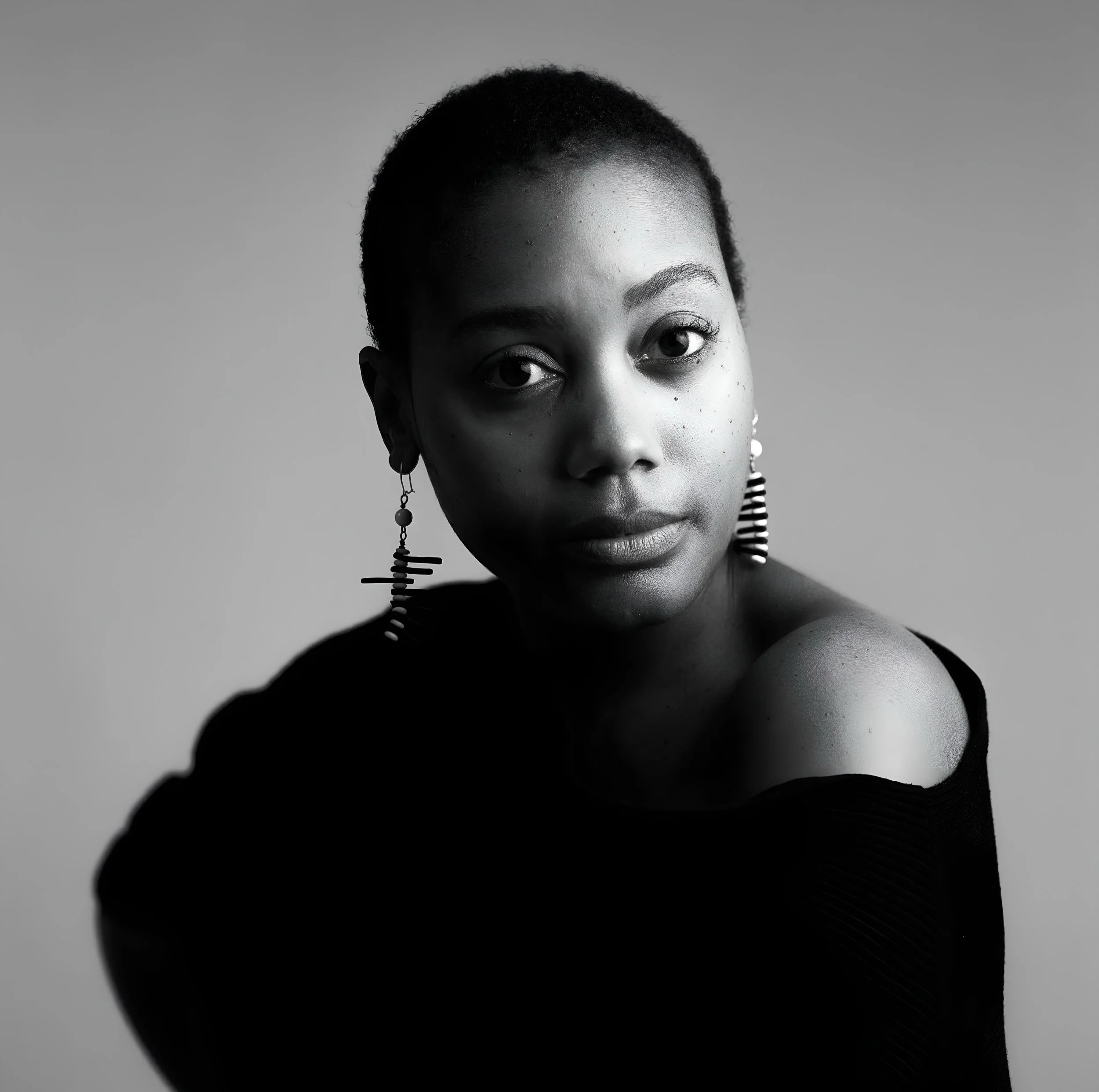
Aisha Josiah
INTRODUCTION
Aisha Josiah is a multi-disciplinary writer, producer and dramaturg from London, UK. Her work includes Dickless (Fundamental Theater Project), for which she received the 2017 Sir Peter Shaffer Award, Outsourced (Brick Theater) and Kindling (Etcetera Theatre). In 2009, Aisha received the North London Film Fund Award for her original screenplay Welcome to Neverland.
Aisha has written for a variety of publications including Media Diversified, The Upcoming and Mouthlondon. Since 2014, she has served as editor of Fringebiscuit, the independent theatre blog.
Aisha is an alumna of Tisch School of the Arts at New York University, where she received a BFA in Dramatic Writing. She has also studied at the University of Ghana, the University of Paris, and has a postgraduate certificate in Playwriting and Dramaturgy from the University of Glasgow.
As a creator, Aisha enjoys disrupting familiar narratives, creating compelling antiheroes and laughing through grief. Her current interests include postmodern explorations of gender, identity politics and postcolonial narratives.
INTERVIEW
How did you get into your creative practice? What initially inspired you?
I came into theatre in my late teens, after many years of competitive figure skating and looking for something new to pour my energy into. I had always loved writing, listening to radio plays, and making up scripts for my siblings and friends to perform. Then I went to see “When the Rain Stops Falling” at the Almeida Theatre and was completely blown away. I joined the Young Friends of the Almeida and started playwriting, which led to internships at the BBC and Roundhouse and my first short film, Welcome to Neverland, which won the North London Film Fund Award. From there I applied to NYU Tisch for Dramatic Writing. My early trips to the Edinburgh Fringe, especially seeing solo shows, were hugely inspiring and showed me the breadth of what theatre could be – it’s still my favourite place, endlessly inspiring. I came to dramaturgy later, through postgraduate studies at the University of Glasgow, and it now forms a huge part of my practice and has completely changed how I approach reading and writing plays.
What themes do you tend to interrogate in your creative practices?
I love a female anti‑hero – the more problematic, the better. It’s a compelling challenge to write a character you might avoid in real life but can’t look away from on stage. I enjoy playing with language; I’ve always been drawn to writers like Sorkin, Mamet, Suzan‑Lori Parks and Caryl Churchill, where the language feels like it’s dancing on the tongue. I’m especially preoccupied with how language shapes our ability to perceive and create the world around us – what happens when you’re stripped of a native language, or when you’re fluent in the languages of imperialism or misogyny, and how that changes how you move through the world and what you can imagine. I like grey areas, ambiguities and moral quandaries, and I’m fascinated by female rage and how uncomfortable that can make us – and if you can explore all of that and still keep it shockingly funny, even better.
What is your favourite project you’ve ever worked on and why?
My favourite project will probably always be Dickless – I have such a soft spot for it. Every time I revisit those characters, I’m pleasantly surprised by how vibrant they still feel. It’s just good fun in the rehearsal room, figuring out the punchlines and how to make them land in new ways while knowing there’s a real tragedy waiting for audiences. I also loved working as a dramaturg on Sugar by Mabel Thomas, which is a beautifully playful yet cathartic piece. And I have to shout out Outsourced, my first interactive play, which we staged and filmed guerrilla‑style in the back staircases at NYU – no real permission, just imagination, no rules and a very DIY spirit – it ended up getting a mention in national media as part of the Gameplay Festival in Brooklyn, which I was very proud of.
What advice would you have for creatives of colour looking to get into your creative practices?
My advice is to read and see as much as you can. As a kid, I was obsessed with audiobooks and can still quote long stretches of things like Great Expectations and The Wind in the Willows. Read everything – from so‑called trashy romantasy to medieval poetry – and experience as much theatre as possible, including radio plays and digital work, because storytelling is storytelling. Listen to your friends’ stories, tell your own, and really engage in imaginative thinking; revel in “what if…?” Follow your curiosity not just in private but in public. People always say “network”, and that matters, but I try to network with curiosity: have real conversations, dream out loud with people, don’t just swap Instas and disappear. Make as much as you can in whatever form truly engrosses you and demands your full attention and creativity – that’s what audiences respond to, not what seems like the safest commercial bet but has no real heart. I also believe in studying the tradition you want to be part of; when you appreciate what has come before, you’re more likely to bring something genuinely new to the conversation.
What are you currently working on?
Over the last few years, I’ve been doing a lot of dramaturgy work, which has taken me to different parts of the world – it’s been fun, challenging and exciting. There seems to be a real trend towards sci‑fi musicals at the moment, which I’m enjoying, including one I’m working on in the States. I'm producing Majenin— a Palestinian love story which will be at the Edinburgh fringe later this year**. Last but not least, I'm developing a new one-woman play called Pitch, which feels like coming back home to writing after a stretch focused more on dramaturgy and producing.
DISCOVER MORE:
Website: www.aishajosiah.com
** Please note that this interview took place prior to the Fringe.