
Spotlight.
Isabel Moura Mendes
INTRODUCTION
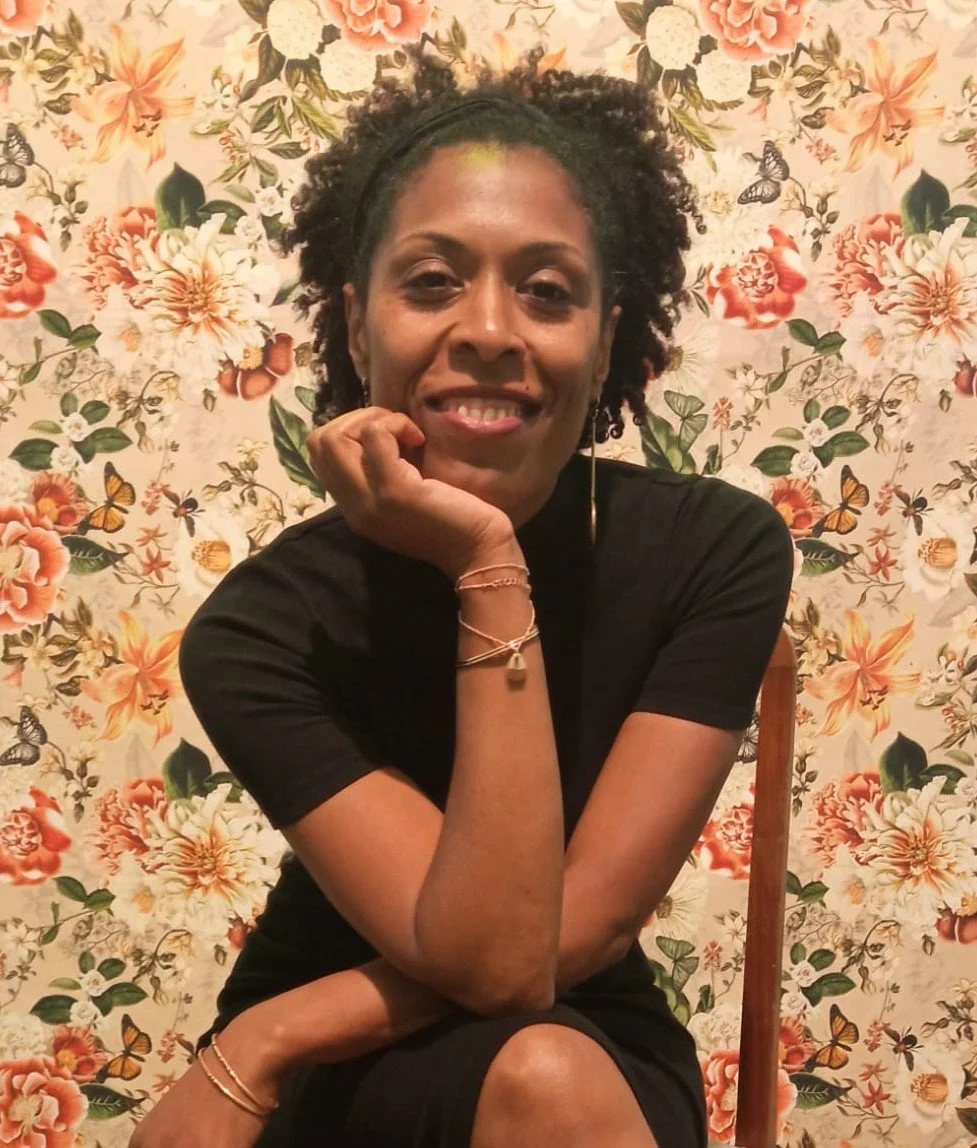
Isabel is a creative and cultural manager with specialism across performing arts and film. Her practice has been centred around international cultural relations and the promotion of artistic exchange as well as film curation, with a focus on African cinema and documentary. She is on the board of Take Me Somewhere Festival, and is part of the Advisory Group for Project X dance platform. She programmed Africa in Motion Film Festival (2011-2012) and Film Africa (2013 - 2019); and co-founded IberoDocs, alongside Mar Felices and Ramon Rivas, in 2014. She is currently Senior Relationship Manager, Theatre & Dance, at British Council.
INTERVIEW
How did you get into your creative practice? What initially inspired you?
As it often happens, it was a teacher who believed in my creative potential. The high school I was in had just opened the year before and they ran a competition to decorate our uninspiring concrete benches with student-made colourful designs. With encouragement from my Arts teacher, I worked on my submissions and two of the benches ended up sporting my creations. I loved the entire experience! Until that moment, I had been a very studious teenager, considering going down the Sciences route because that's what you did if you had good grades. I had never allowed myself even the possibility of considering a career in the arts, coming from a Cape Verdean immigrant family in Portugal, with a working class background. That moment changed everything. The next year I transferred to a school offering an Arts High school programme. I went on to explore different artistic disciplines, but film and more specifically the cinematic production coming out of the African continent, which I (like too many people) hadn't had access to for most of my life, really spoke to me - seeing yourself represented onscreen can do that to you! So, I started working with African film initiatives, doing a bit of everything management-related but really falling in love with programming. Those experiences also helped me realise my logical brain and my judicious demure make me a pretty good arts manager. Which is why I describe myself as a creative and cultural manager.
What themes do you tend to interrogate in your creative practices?
A great deal of my practice has existed in the international relations space, which reflects my own personal path, having intentionally lived and worked in Portugal, Cape Verde and the US before setting in Scotland. Many years before I started performing different roles in the British Council Arts teams, my first job in arts administration was to produce a cross arts international exchange between Cape Verdean and North-American partners. The theme of cross-border artistic collaboration/exchange and the creative jolt & identity politics revisioning process that it provokes in all involved, is something both powerful & transformative. I truly believe this is what we need more of to counter the quite violent 'othering' rhetoric that is, sadly, taking hold across 'westernized societies'. This rhetoric vilifies Global Majority peoples and cultures who have held, for centuries, the ancestral knowledge that forms the foundation of our contemporary civilization(s). Artists, when they come together, breaking free from the artificial borders that have separated people who will always have more in common than what separates them - when they share & (re) discover one an(other) they are able, through the creative process to (re)draft visual/musical/movement/interdisciplinary maps to bring us back to the source, akin to what 'griots' do in West African kingdoms. Might sound too hopeful of me to say this, but I truly believe it!
What is your favourite project you’ve ever worked on and why?
One of my favourite projects to have worked on was also one of, if not the most difficult project I've ever been involved with. In early 2019 I partnered with my dear friend Natalia Palombo, to co-curate a new work by Scotland-based Nigerian interdisciplinary artist Ayọ̀ Akínwándé. The piece was to form part of the Inside Out strand at Factoria Havana, for the 13th Havana Biennale, in Cuba. The project gave me a unique opportunity to both extend my curatorial practice to visual arts/interdisciplinary work but also a chance to work with Natalia (with whom I had collaborated at the Africa in Motion Film Festival, some years prior) and with Ayọ̀, who had recently moved to the UK. We had no experience working together as a trio, nor of working in a Cuban context and were thus, very reliant on the local partner. As it progressed, the project was close to falling apart at various stages, with numerous challenges including us all tasting a different flavour of racism I had yet to encounter by that point - which we had to manage first remotely, and then and on the ground, in Havana. After overcoming many trials, Ayọ̀'s piece did come to life and was warmly received. It came to be because, between the three of us, we had created a force that stemmed from Natalia's fierce curatorial stewardship, Ayọ̀'s resolution and artistic clarity, and my diplomatic muscle. It felt both like a meaningful collective victory and a crucial teaching moment in my career.
What advice would you have for creatives of colour looking to get into your creative practices?
Surround yourself with both peers and allies you can trust. As a creative, you exist in a space of vulnerability already and with being a creative of colour there is a chance you would have/are/will be at the mercy of systemic racism in the arts too (there, I said it!). So make sure the people who form the walls of your space are people who have the ability and the willingness to hold & support you. And remember 'all skinfolk ain't kinfolk' so put intentional effort into finding your tribe.
What are you currently working on?
I am so privileged to be working with two immensely talented peers: Carmen Thompson and Tomiwa Folorunso, who are, like me, long-standing producers, programmers and cultural organisers with deep roots in the film, festival and arts sectors in Edinburgh. Earlier this year, the three of us formed Jali Collective, a grassroots collective with the purpose of widening access to African cinema and to celebrate and elevate Black, African and diaspora stories through film and culture. We are bringing our first project the Jali Film Weekender a brand new film festival to the Filmhouse Cinema in Edinburgh, from 30th Oct to 2nd Nov. Under the theme of the Dreams and Apparitions, we have programmed a vibrant selection of narrative, documentary, animation, experimental and short film, each offering a distinct vision from the African continent and diaspora. It is a festival for us, first and foremost, so we are hoping that our communities will embrace it and come out to see their own stories onscreen and support us!