
Spotlight.
Iffat Ahmad
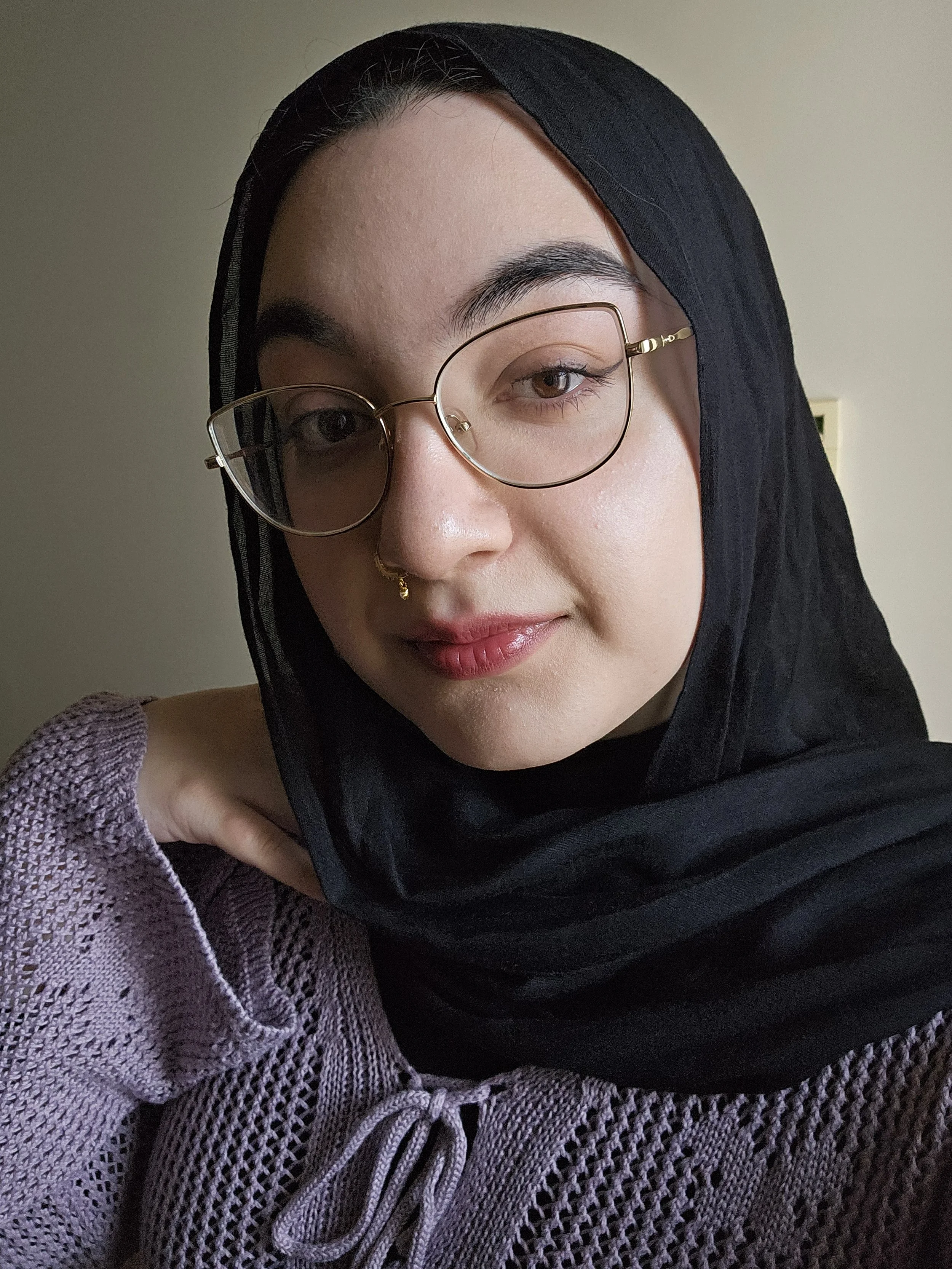
INTRODUCTION
Iffat Ahmad is a professional henna artist based in Glasgow with over a decade of experience. She mainly draws inspiration from the vast traditions and styles of South Asian art and craftmanship, reimagined in unique, stylised henna designs. She’s a versatile multi-disciplinary artist, honouring the decorative style of henna art and pushing boundaries by experimenting with non-traditional elements and mediums. From illustrative henna art inspired by Indian miniature paintings to hand-crafted clay jewellery with unique henna embellishments, Iffat uses henna art to bridge tradition and contemporary design. She is also passionate about the communal and therapeutic benefits of henna, and has delivered free henna workshops for young BPOC centred around mental well-being and community care.
INTERVIEW
How did you get into your creative practice? What initially inspired you?
Undoubtedly, my upbringing as a Kashmiri-Pakistani Muslim has given me a deep appreciation for the way humans have always wanted to make everything look beautiful, including everyday objects we use. My initial inspirations come from being surrounded by patterns and decorative art growing up, because the elder women in my family also had a huge love and appreciation for beautifully decorated objects and clothing. According to them, clothes should never be boring and plain or neutral, there should always be some colour and/or pattern. The biggest example of this is my mum. She wears the Niqab, and although she owns the typical black fabric for Niqab, she loves patterns and colour so much that she developed her own non-traditional way to cover her face using beautifully printed square scarves. As a child I was also very artistic, so I was drawn to decorative art and noticed it in everything. Traditional wooden boxes, textiles and prints on scarves and clothing, Pakistani pottery, carpets, mirrors, jewellery. I would take notice of pages of the Qur’an illuminated with patterns when I went to reading classes as a child. And I would wonder where the origins of all these different patterns came from and why they all looked similar in aesthetic, and how did the artists that created them think to come up with these motifs centuries ago. Similarly, henna art was loved by the women in my family, and with it being a major part of cultural and religious traditions and ceremonies it felt very natural for me to have a deep interest in it.
I first started off drawing henna patterns on classmate’s hands with pen, and then I began incorporating it into stylised paintings of figures and faces when I was completing advanced higher art in school. Again, because I grew up surrounded by people who valued patterns and quite literally covered themselves with it, it just felt true to me artistically. Within that time, I also started trying the real thing with a henna cone and taught myself to apply henna. Fast forward to the last 4 years, I wanted to gain deeper knowledge about South Asian and Persian art, specifically from the Mughal era, because I’m always fusing these elements and aesthetics into my henna designs. This has now evolved to the present with me merging all these different art forms, cultures, and inspirations, and producing illustrative artwork through different mediums like polymer clay jewellery.
What themes do you tend to interrogate in your creative practices?
Off the bat I think it’s about exploring themes of cultural identity and tradition in contemporary ways, but also celebrating art beyond cultural boundaries, as the historical origins of all these different forms of South Asian art are due to cross-cultural integration. It’s also about preservation. We know that local and indigenous arts and craftmanship are at risk of erasure due to mass production, colonialism, capitalism and unfair compensation of skilled artisans particularly from the Global South. This is why the preservation of henna as a practice is so important to me, as often its either whitewashed as a temporary tattoo you get done at festivals, or solely done for cosmetic purposes with seemingly no other benefit. Likewise, by drawing inspiration from South Asian art, like Indian miniature painting, frescos, embroidery, and gilding to name a few, it’s important to me that I celebrate these traditions as my foundation in helping me develop my creative practices, and to continue to learn and share as much knowledge and history as possible. Making something with your hands inspired by the skills and practical techniques of traditional artists is truly something unique, and that sense of cultural identity and richness gets lost within mass production.
At the same time, it’s also about connection, mindfulness, and storytelling. Mental health has been a struggle for me for as long as I can remember, and engaging with crafts like painting, henna art, and polymer clay, has been my main form of emotional grounding and self-expression. This is also why I see henna beyond just aesthetics, the entire essence and experience of henna application provide sensory and therapeutic benefits, and in cultural contexts it's often about bringing community together during times of shared happiness and meaning. Storytelling is also very well-known across the South Asian arts, everything from visual arts to traditional dance centres this theme, and it’s a huge motivation for me in telling a story with my henna art. These are the themes I really want to embody and continue to express throughout my work.
What is your favourite project you’ve ever worked on and why?
My journey into creating polymer clay jewellery. I came across videos last year of polymer clay artists making jewellery and immediately wanted to try it. I’m forever grateful to the team from We Are Here Scotland for believing in my ideas and providing me with the opportunity and access to bringing this project to life. I thrive off creating detail-oriented art, and this project scratches the same itch that henna does for me. I know most people hate the slowness of pain-staking details, but I personally feel a deep sense of satisfaction when I manage to execute all the fine details and everything comes together. I think another reason why I love it so much is that it provides a counterbalance to the more fast-paced work you’re often expected to do with henna. I can go at my own pace and just lose myself in sculpting little leaves repeatedly.
What advice would you have for creatives of colour looking to get into your creative practices?
When it comes to henna, it’s a little different for artists of colour. We’re not entering a creative field that is dominated by the West and White creatives, since it’s so tightly imbedded with traditions from cultures of the Global South, and often many of our clients are also from the same cultures. At the same time, we’re also grappling with the fact that it’s still not fully considered “real art” within creative spaces in the West, or given as much value and recognition compared to other male-dominated art forms in our cultures (and thus considered more legitimate). My advice to anyone who is just starting off as a henna artist is to not be afraid to be explore and branch out with your skills and knowledge in henna art. Having a solid sense of belief and trust in your craft, and in honouring the origins of the practice, it’s going to help make things so much easier when you introduce henna in non-traditional settings. Henna is more versatile and adaptable than we think, it can be the central theme or aesthetic of so many forms of creativity and self-expression.
Another piece of advice would be to learn as much as you can about henna. Usually we’re to exposed to henna art in specific cultural contexts, so we have a general idea about what it is. But we don’t know the full history and origins, its vast uses and benefits, or even the science behind it as a natural herbal dye. These are important because it helps us stay informed on what type of henna is safe to use, and in turn adds to the level of professionalism by informing others. Like most goods nowadays, henna paste and henna cones are mass produced to instantly dye the skin, often containing chemicals that are harmful. You can find many henna artists who make and supply fresh, organic henna paste made with natural ingredients. We use henna the same way our ancestors did, and before chemical henna cones existed, they already possessed knowledge on how to use henna paste and successfully dye the skin. So having this knowledge will not only help keep you as the artist safe, but also your clients or anyone you apply henna on.
What are you currently working on?
Currently I’ve been working on creating two henna classes for the annual Henna Huddle UK next year. This is a three-day henna conference based in England where artists from around the world come to teach henna within their areas of expertise. I’m excited because I’ll be teaching a henna class on Indo-Mughal-Persian fusion, while the second class will be creating stylised faces for bride and groom portraits (typically done for bridal henna). My experience with teaching henna classes has only been through developing henna workshops for beginners with the charity Tiny Changes. These workshops are centred around mental health and community care for young BPOC, so it goes beyond me solely teaching people how to do henna art. However, with Henna Huddle this will be my first time building and teaching in depth classes and showing exactly how I create my style of henna designs.